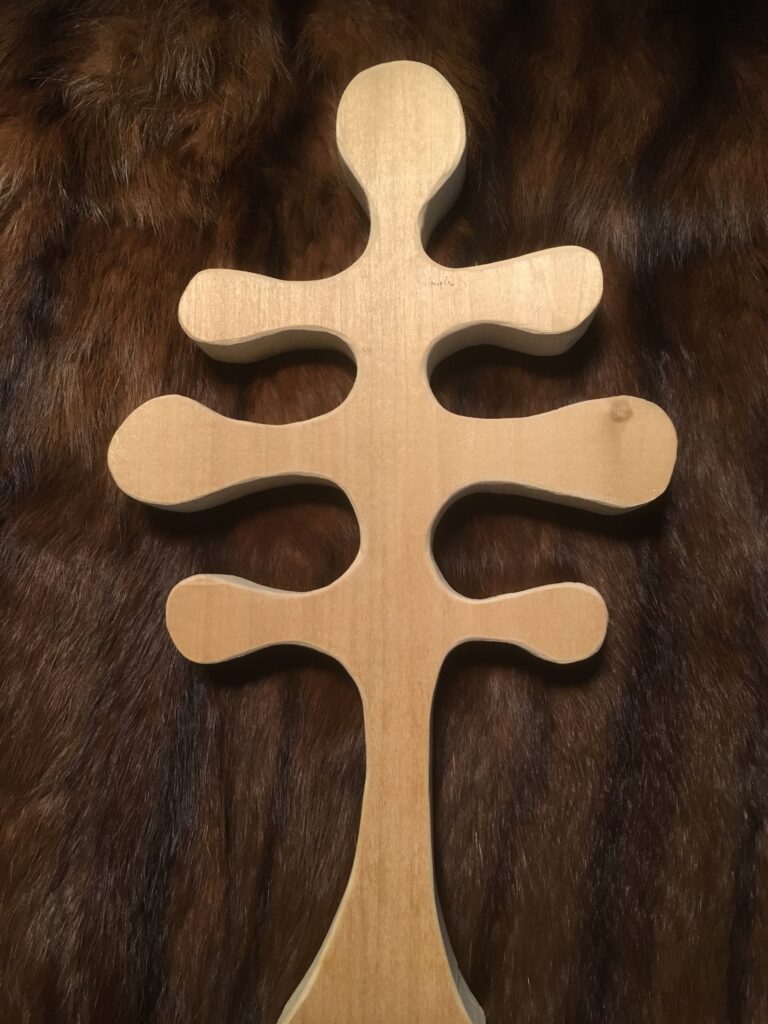
The Beaver Cross, 2017
Poplar
9 1/4″ x 5 3/8″ x 3/4″
The Beaver Cross is inspired by the Lorraine sliver trading Cross given to natives by Jesuit priests in a way to indoctrinate them and spread Christendom through the new lands. Like the Beaver coin a large cross would have a trade value one small beaver pelt (three bars having the most value). Silver became a symbol of friendship and alliance and was first used in military alliances during the colonial wars. Fur traders presented gifts of silver to the chiefs of tribes with whom they wanted to trade. Not seen as a bribe but as a token of goodwill, the practice followed the Native American tradition of wampum exchange symbolizing an agreement between equals.
The symbolism was in the gesture and not in the form itself. Whereas to the silver was prized and rare item to the natives it may have had more associations to nature (sometimes noted to the resemblance to dragonflies) than Christianity. This piece is also about resources and the value placed on them. While the silvers use during the fur trading period was that of exchange, used in jewelry and coins, the intrinsic value of this metal would more a durable scarcity. Unlike copper or iron, silver is typically too soft to be used for tools and weapons.
READ MORE
This piece is made of poplar. It is an exceptionally workable resource which makes it a favorite tree of the beaver. It serves as a food source (they eat the bark and softer growing tissues under the bark) and a building material. It is a hardwood but it is softer and lighter which means it is easier to fell and move. For the beaver, this tree has great value. It is intrinsic and holds no symbolism. If you gave this cross to a beaver, it would likely use it in its damn…(note to self: make a beaver damn out of discarded roman catholic crosses).
Poplars are a resilient tree which makes me think of the difficult times that many of the people of Detroit have had to endure. And those lines can be can be directed back to the Lorraine Cross which became an important national symbol of independence and resistance
for France during World War II-it was the answer to the Nazi swastika. For many people who came to the US from Europe in the late 19th and early 20th century, cities like Detroit represented an escape from hardship and oppression.
Another personal layer comes from my Hungarian grandparents, whom came to Detroit in the 1920’s. They were part of these peoples who were looking for a chance at a better life…a life. The Lorraine Cross which can be traced back to the Kingdom of Hungary in the 15th century had been adapted and change from Bizintine crosses and Orthodox Crosses. These symbols are not stationary. Their meaning change over time and function in a way that are essential to the people who are utilizing them at specific times in history. Detroit is no different in that its stories and meanings have changed over time. Delray a neighborhood in Southeast Detroit which largely Hungarian neighborhood. Positioned adjacent to industry it became a landing spot for many factory workers(both sets of my grandparents lived here in the 1920’s). As the neighborhood dwindled all that remained was the industry and a couple of Hungarian Catholic Churches. St. Janos Catholic Hungarian Church
became a Baptist church and eventually went abandoned and will soon be demolished but you can still see the three barred cross as a clue to who the people were who were once there. And as this all gone there will likely be a beavers bearing no crosses and trees being trees. (
This cross was also a nod to my Hungarian heritage. The
This piece also represents the bond of the people who came to Detroit over time sharing many meanings, separate and together. It serves as an intersection point of human experience though religion, natural resources ….
Yes, poplar trees are generally considered resilient and adaptable
In addition to its connection to Christianity, the Lorraine Cross
And despite its heavy historical past this symbol can simply turn into a dragonfly or a construction material for a beaver dam.
About the book
This exquisite compilation showcases a diverse array of photographs that capture the essence of different eras and cultures, reflecting the unique styles and perspectives of each artist. Fleckenstein’s evocative imagery, Strand’s groundbreaking modernist approach, and Kōno’s meticulous documentation of Japanese life come together in a harmonious blend that celebrates the art of photography. Each image in “The Stories Book” is accompanied by insightful commentary, providing historical context and revealing the stories behind the photographs. This collection is not only a visual feast but also a tribute to the power of photography to preserve and narrate the multifaceted experiences of humanity.